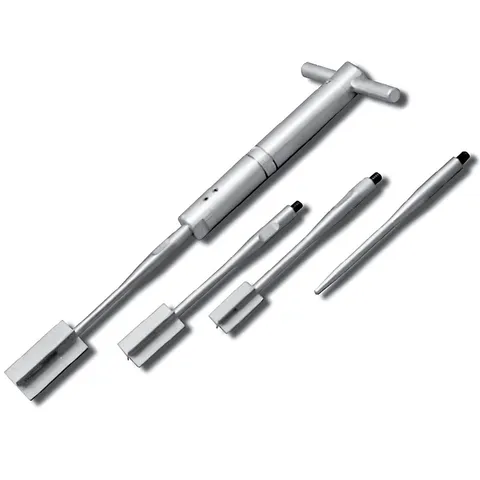
TEXAM Pressuremeter: Ground Engineering Problems Evaluation
The Texam is a pre-boring pressuremeter used to run routine in-situ loading tests in soil and very soft rock at various depths, evaluating ground-engineering problems by yielding the Pressuremeter Modulus, Creep Pressure and Limit Pressure.
- Working pressure
- 10,000 kPa (1500 psi)
- Accuracy
- 0.05% FS (pressure)
- Pressure resolution
- 1 kPa
Overview
In detail
How it works
The probe - a cylindrical hollow body fitted with an inflatable sheath - is placed at test depth in a pre-drilled borehole (wet rotary drilling, augering, shelby tube pushing, etc.), or driven directly within a slotted casing in granular soils below the water table. The test runs at either a constant rate of deformation (uniform rotation of the actuator) or with equal pressure increments, as for the Menard pressuremeter test.
An in-situ stress-strain curve is obtained by plotting injected volume against pressure, yielding the Pressuremeter Modulus Ep, Creep Pressure Pf, and Limit Pressure PL.
What's included
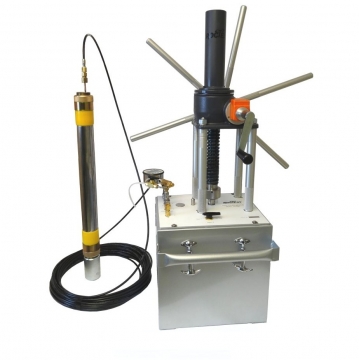
The control unit is a metal case housing the main cylinder, four quick connectors and the control valve, with a manual screw-jack actuator to operate the piston and a digital pressure gauge. A high-pressure single-conduit tubing fitted with a shut-off quick connect keeps the probe and tubing saturated.
Reach out and say hi
Specifications
Technical specifications
- Working pressure
- 10,000 kPa (1500 psi)
- Accuracy
- 0.05% FS (pressure)
- Pressure resolution
- 1 kPa
- Volumetric resolution
- 0.01 cc
- Probe diameter
- 74 mm (N, long) / 44 mm (A)
- Probe length
- 72 cm (N) / 59 cm (A)
- Probe weight
- 6.4 kg (N) / 4.5 kg (A)
- Control unit dimensions
- L 40 cm x W 46 cm (incl. handle) x H 45 cm
- Control unit weight
- Metal case 30 kg, actuator 28 kg
Related
Often specified alongside
Geosystems
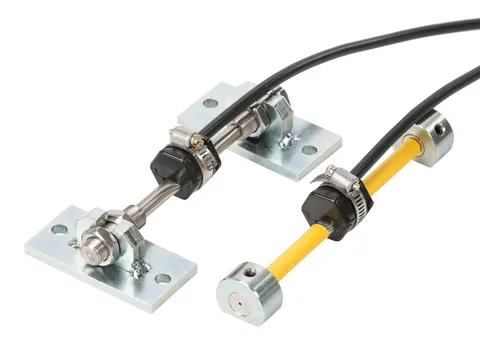
Vibrating Wire Strain Gauge SM-5
- Range
- 3000 µε
- Accuracy
- +/- 0.5% F.S.
- Temp
- −20 to +80°C
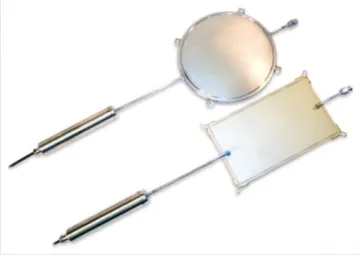
- Range
- 200 to 35,000 kPa (standard steps up to 35,000 kPa)
Ready to specify?
Add TEXAM Pressuremeter: Ground Engineering Problems Evaluation to your enquiry
Build a list, add your site notes, and an ESS engineer will quote the lot — cables, mounting and calibration included.