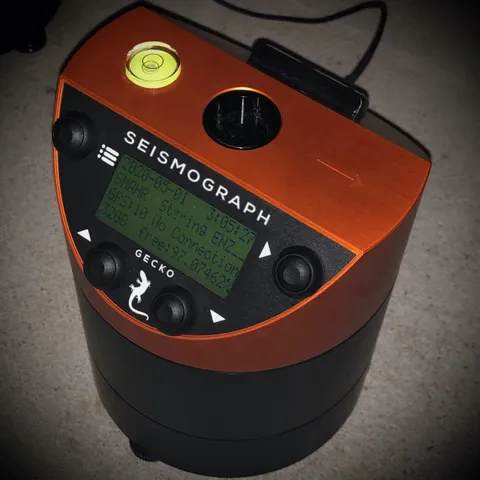
Broadband Seismograph
A broadband seismograph pairs a broadband seismic sensor with a digitiser capable of recording the full range of frequencies present in earthquake signals, from long-period oscillations through to high-frequency vibrations, without loss of amplitude linearity.
- Range
- 40-4000 samples/second (configurable)
- Data format
- miniSEED, logged to SD card
- Timing
- GPS-synchronised
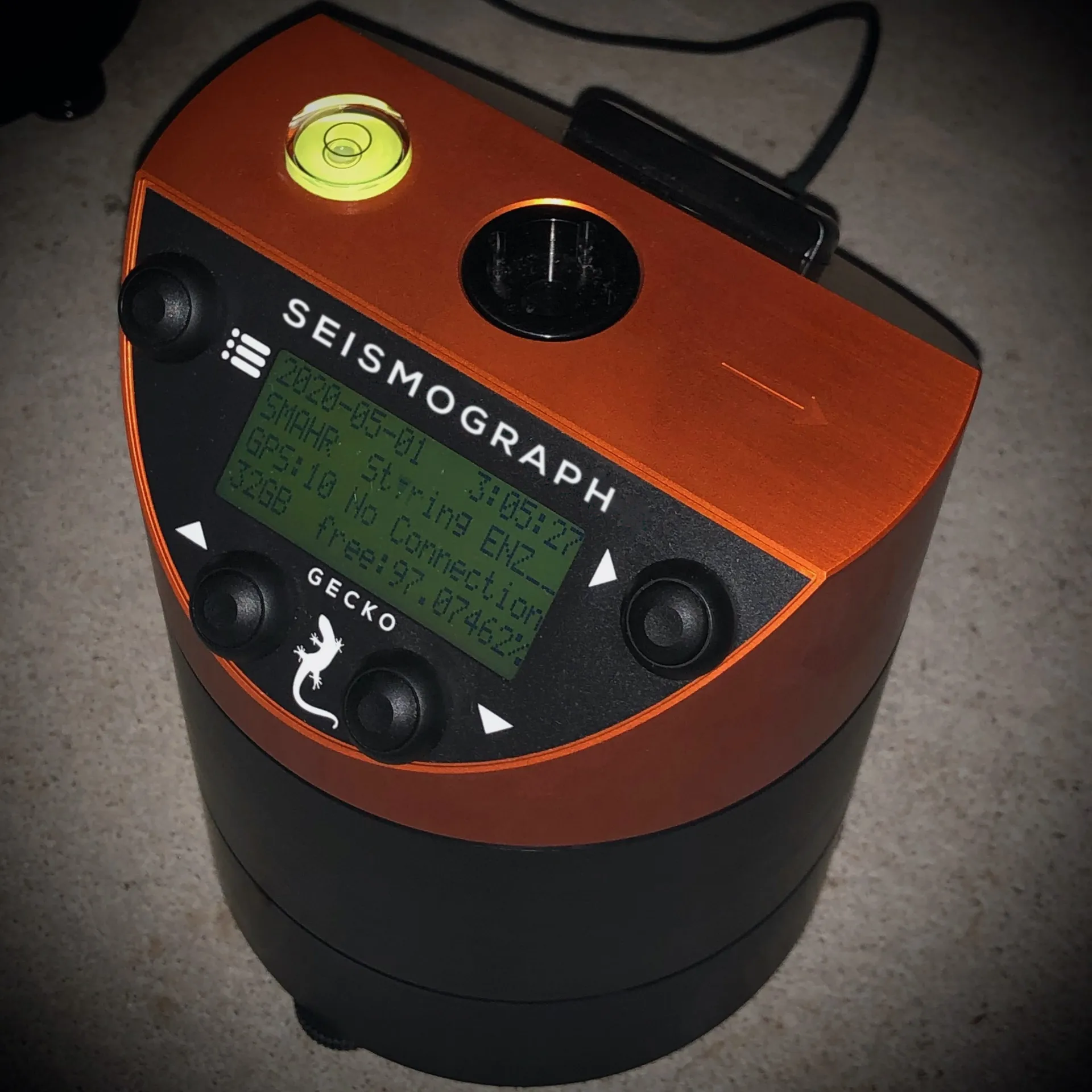
Overview
In detail
What makes a seismograph "broadband"
"Broadband" describes the range of frequencies a sensor can detect, which depends on its design. Short-period seismometers output a consistent amplitude at 2 Hz and above but lose accuracy below that; medium-period sensors stay linear down to about 0.016 Hz (a 60-second period) but tend to lose linearity above 100-200 Hz. Long-period, or broadband, sensors are linear from a 120-360 second period up to 50-100 Hz, letting them capture most global and local earthquakes, provided their self-noise is low enough across that band.
Some cheaper sensors claim very long periods but have high self-noise, which limits them to detecting only high-amplitude signals - making them impractical for some research applications.
Digitiser
The Kelunji Gecko seismic data logger is compatible with any seismic sensor on the market. It samples at a user-configurable rate from 40 to 4000 samples per second and stores data continuously as miniSEED files to an SD card, with GPS-synchronised timing. It is available as the low-cost Gecko Compact, the waterproof Gecko Rugged, and variants that integrate sensors, backup batteries and communications systems.
Reach out and say hi
Specifications
Technical specifications
- Range
- 40-4000 samples/second (configurable)
- Data format
- miniSEED, logged to SD card
- Timing
- GPS-synchronised
- Sensor compatibility
- Works with seismic sensors from any manufacturer
Related
Often specified alongside
ESS Earth
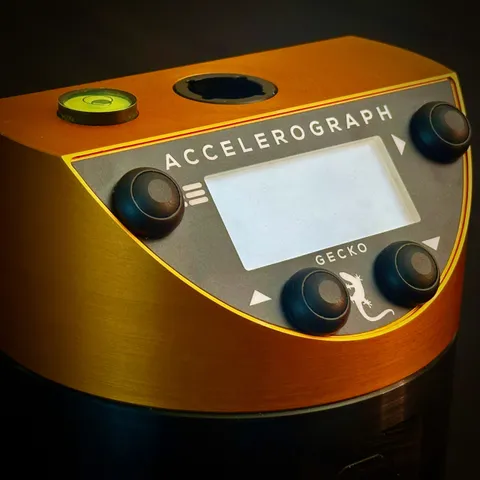
Strong Motion Accelerograph
- Range
- ±4g accelerometer range
- Storage
- Local SD card, continuous ring buffer
- Connectivity
- Ethernet or cellular modem telemetry (optional)
- Range
- ±2g, ±5g, ±10g and higher, up to ±400g full scale
Ready to specify?
Add Broadband Seismograph to your enquiry
Build a list, add your site notes, and an ESS engineer will quote the lot — cables, mounting and calibration included.