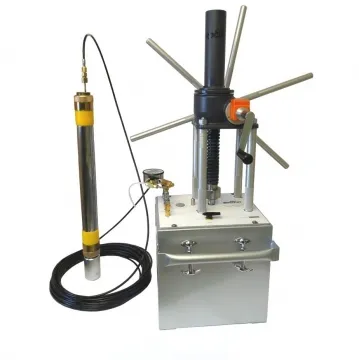
Vibrating Wire Load Cell
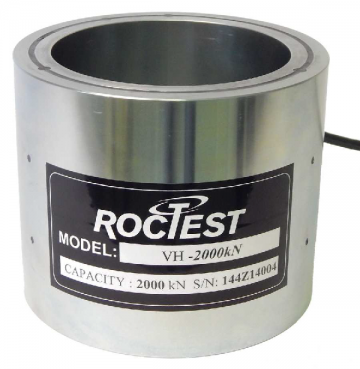
The VH vibrating wire load cell is a rugged, compact sensor that measures tensile or compressive loads on rock or soil anchors using one to six vibrating wire strain gauges around a heat-treated steel load-sensing cylinder.
- Range
- 500, 1000, 1500, 1800, 2500, 5000, 10 000 kN (nominal; can be modified to suit project)
- Accuracy
- ±0.5% F.S.
- Resolution
- 0.025% F.S. (min.)
Overview
In detail
How it works
The load-sensing element is a cylinder of high-strength, heat-treated steel. Local compressive strains induced by tension in the anchor are measured by one to six vibrating wire sensors; averaging their readings minimizes the effect of eccentric loading. A thermistor built into the gauge provides temperature data to correct for material effects.
Deployment
A steel housing with O-ring seals protects the strain gauges from mechanical damage and water infiltration; the load cell and connector are water-resistant. The cable exit runs parallel to the housing surface for better clearance, and centralizer bushings and load distribution plates are available as accessories. A plain jacketed cable links the cell to a readout or data acquisition system.
Reach out and say hi
Let us help. Tell us the site, the range you expect and what it has to talk to, and we’ll work out the right variant, cable and mounting — and quote it.
Specifications
Technical specifications
- Range
- 500, 1000, 1500, 1800, 2500, 5000, 10 000 kN (nominal; can be modified to suit project)
- Accuracy
- ±0.5% F.S.
- Resolution
- 0.025% F.S. (min.)
- Overload
- 1.5 × F.S.
- Operating temperature
- −20 to +80°C
- Sensors
- 3 or 6 vibrating wire strain gauges
- Cable
- IRC-82A, IRC-121
Related
Often specified alongside
Geosystems
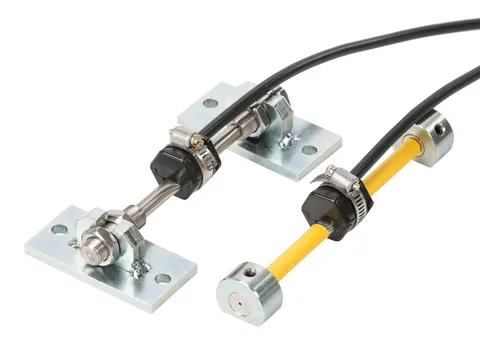
Vibrating Wire Strain Gauge SM-5
- Range
- 3000 µε
- Accuracy
- +/- 0.5% F.S.
- Temp
- −20 to +80°C
- Range
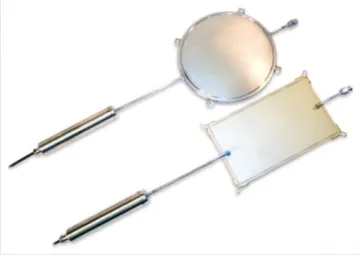
- 200 to 35,000 kPa (standard steps up to 35,000 kPa)
Ready to specify?
Add Vibrating Wire Load Cell to your enquiry
Build a list, add your site notes, and an ESS engineer will quote the lot — cables, mounting and calibration included.