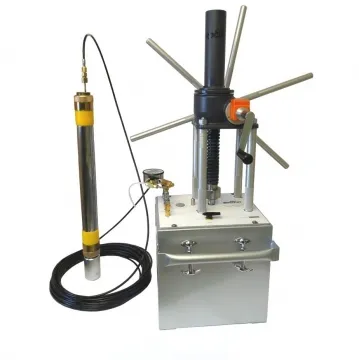
CSIRO Hollow Inclusion Cell Rock Stress Sensor
The CSIRO Hollow Inclusion (HI) Cell is a strain-gauge sensor for three-dimensional stress measurement in rock or concrete, used for decades in high-stress mines and for monitoring stress and strain in tunnels and other structures.
- Readout
- Requires a strain bridge monitor, or use the digital HID Cell with a breakout box, PC, or serial logger
- Installation
- Strain gauges bonded to rock via temperature-specific glue packs; can be over-cored for a stress profile
- Borehole size
- 38 mm diameter (EX or EXT); 100–150 mm diameter for overcore
Overview
In detail
How it works
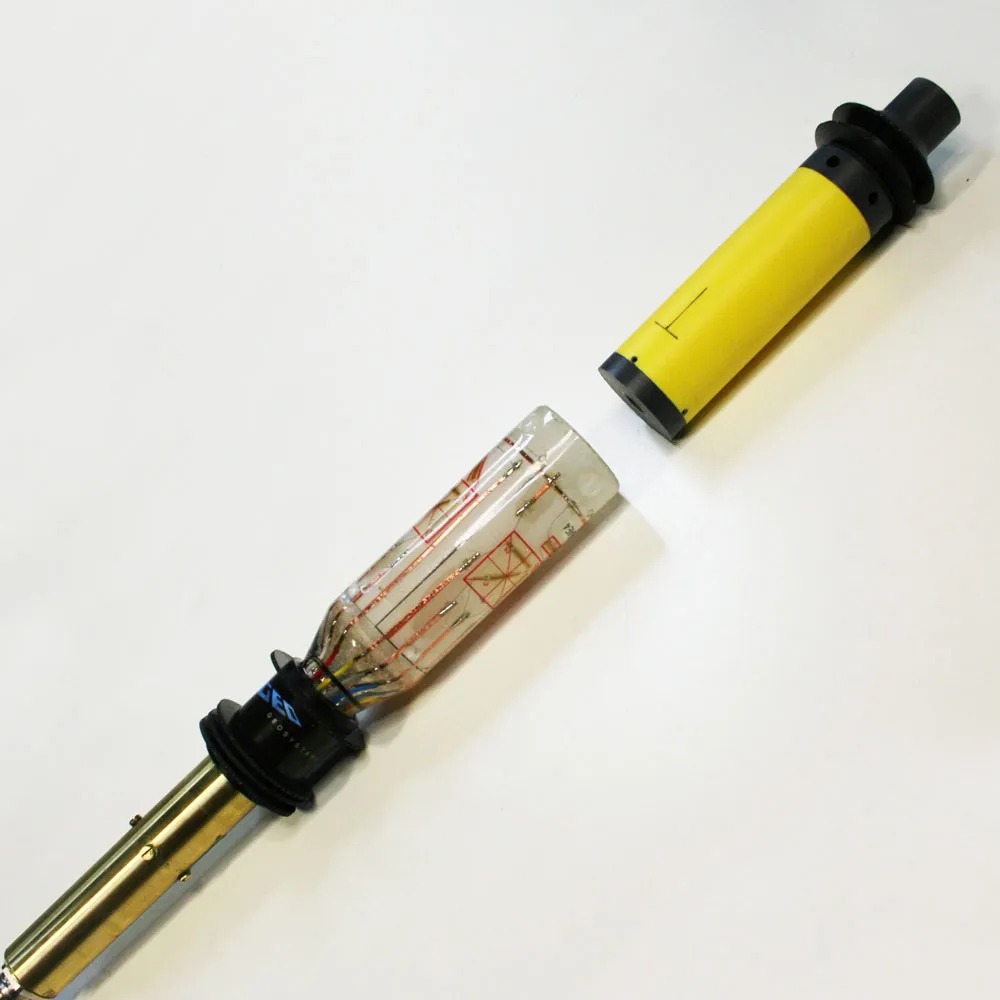
Highly sensitive strain gauges are bonded to the rock using temperature-specific glue packs in a mechanical process that lets the gauges become part of the rock very rapidly.
The gauge can be left in-situ for long-term stress-change measurement, or over-cored to determine a stress profile of that section of rock.
Deployment
The HI Cell requires a strain bridge monitor to read values. Alternatively, the digital version (the HID Cell) can be logged using a breakout box and tablet, a PC, or a serial data logger, with software available for data analysis.
Installation
The HI Cell is installed into a 38 mm hole by filling the hollow body of the cell with a pre-formulated epoxy cement. Cement is extruded by the piston when the cell reaches target depth, and multiple rubber seals confine the grout flow to around the cell. Once the grout has cured, the strain gauges are fully bonded 1.5 to 2.0 mm from the borehole wall, for which allowance is made during data reduction.
Strain response can be monitored during overcoring via the data cable, which runs through the drilling rods and a modified water swivel to a logger, tablet or PC — indicating conditions such as the onset of core cracking, cell de-bonding or inelastic response of the rock. The retrieved overcored section of rock containing the cell may be restressed in a biaxial pressure chamber to derive the actual rock properties.
Data analysis with Stress 201m
The Stress 201m programme determines stresses and relative stresses from raw data output from a CSIRO HI cell or HID Cell. Run from Excel, it converts raw voltage to strain, plots monitoring data, imports data from a logger, and saves and opens monitoring files. The programme is for genuine ESS Earth Sciences manufactured CSIRO HI and HID cells, with preset values for the alpha and beta angles of the strain gauges.
Specifications
Technical specifications
- Readout
- Requires a strain bridge monitor, or use the digital HID Cell with a breakout box, PC, or serial logger
- Installation
- Strain gauges bonded to rock via temperature-specific glue packs; can be over-cored for a stress profile
- Borehole size
- 38 mm diameter (EX or EXT); 100–150 mm diameter for overcore
- Grouting
- Pre-formulated epoxy cement; gauges bonded 1.5–2.0 mm from the borehole wall once cured
- Analysis software
- Stress 201m (Excel-based) for stress determination from CSIRO HI Cell and HID Cell data
Downloads
Documentation, openly available
Everything you need to specify, install and integrate the CSIRO Hollow Inclusion Cell Rock Stress Sensor — no login, no paywall.
Related
Often specified alongside
Geosystems
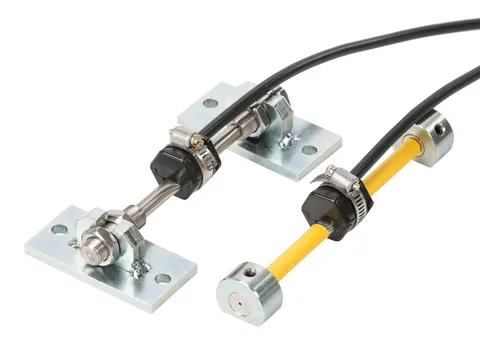
Vibrating Wire Strain Gauge SM-5
- Range
- 3000 µε
- Accuracy
- +/- 0.5% F.S.
- Temp
- −20 to +80°C
- Range
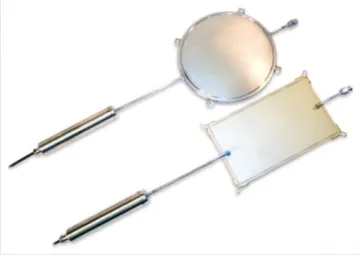
- 200 to 35,000 kPa (standard steps up to 35,000 kPa)
Ready to specify?
Add CSIRO Hollow Inclusion Cell Rock Stress Sensor to your enquiry
Build a list, add your site notes, and an ESS engineer will quote the lot — cables, mounting and calibration included.